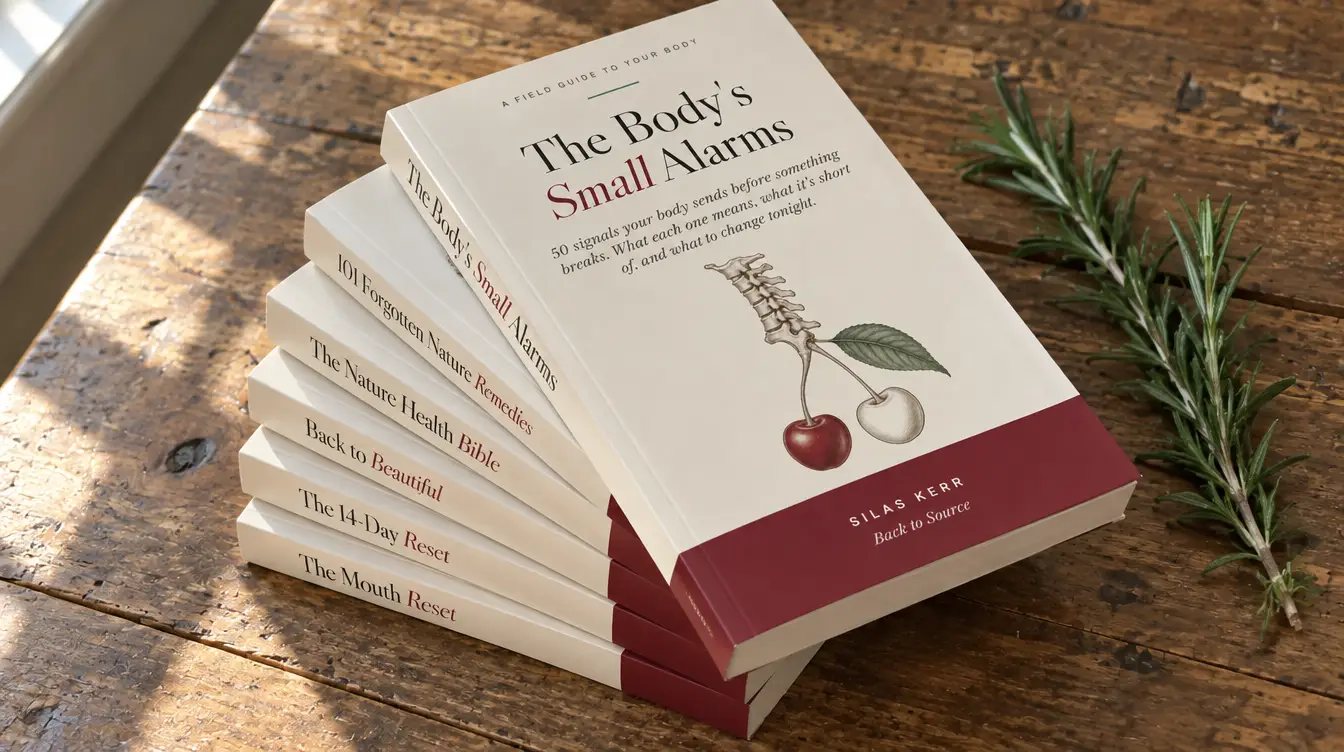
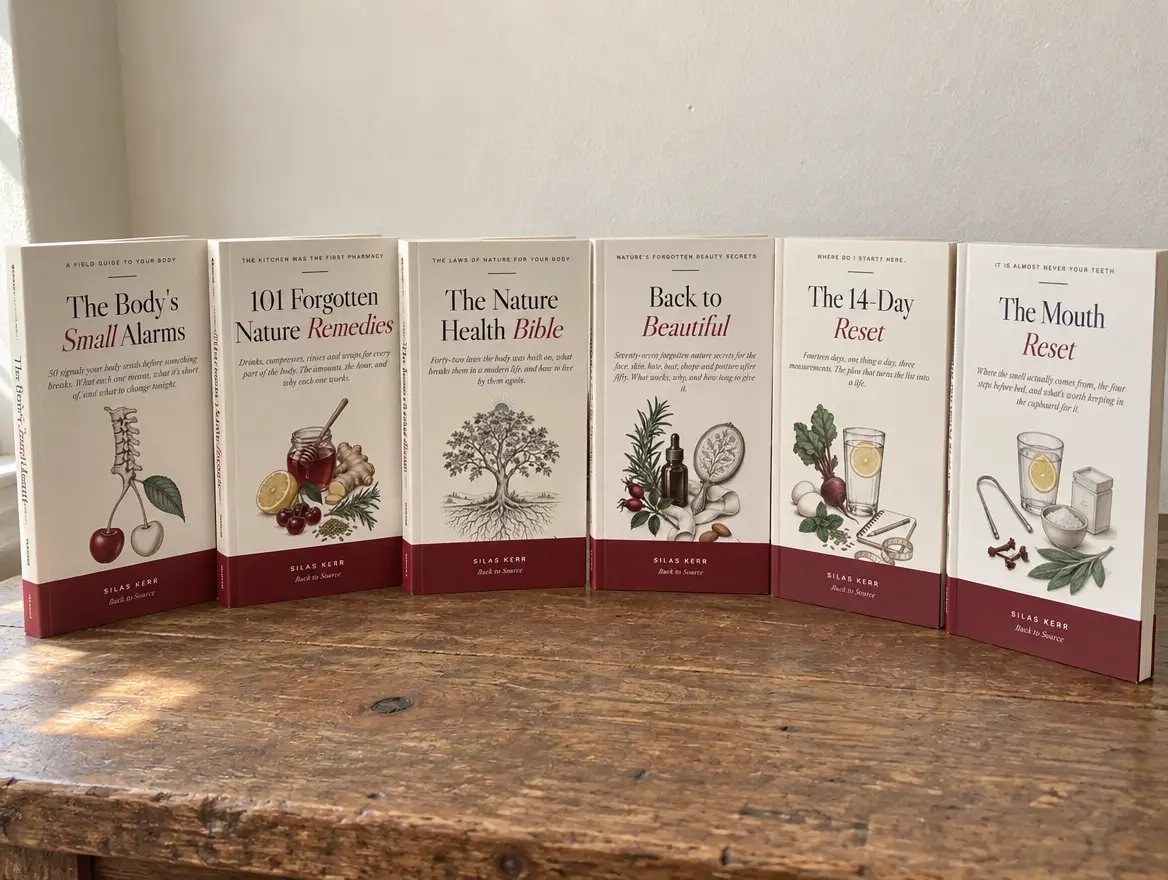
Inside the bundle
Four books that each answer one question. Two small ones that get you started.
Every book stands on its own. Together they are the whole picture: reading your body, what nature has for it, the laws behind it, and the mirror.
Why e-books only
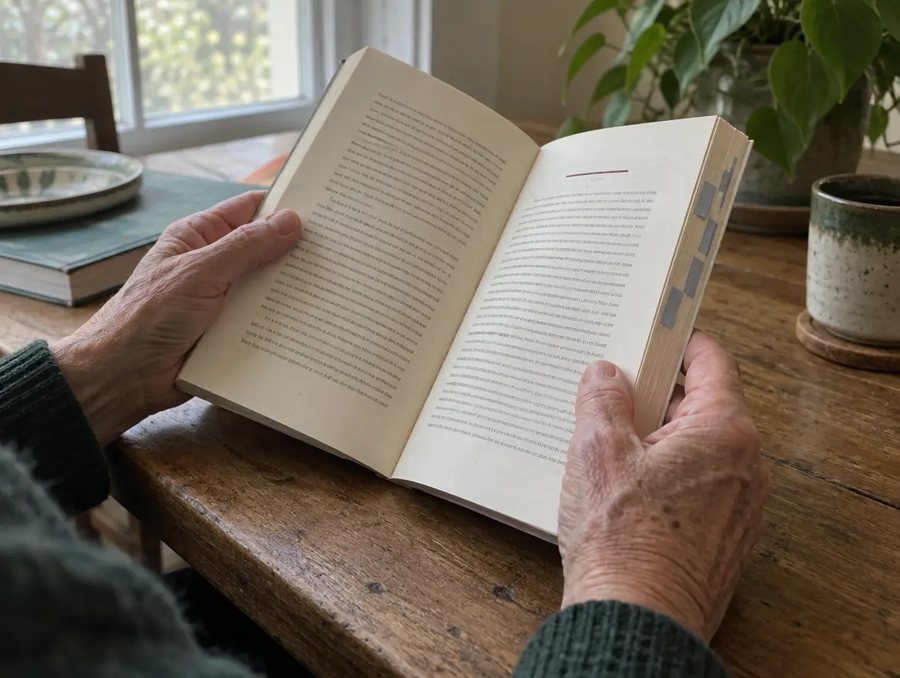
Because I am not finished learning. Every month I find something new: an old remedy that turns out to work, a better way to do a step, a signal I had missed. A printed book is finished the day it leaves the press. These are not. When I learn something, it goes into the book that same week, and your copy with it. Buy it once; every update is yours.
Slide the row and tap a cover. What is in it follows the book you choose.
Book 01 · on its own $8.95
The Body's Small Alarms
"What is my body trying to tell me?"
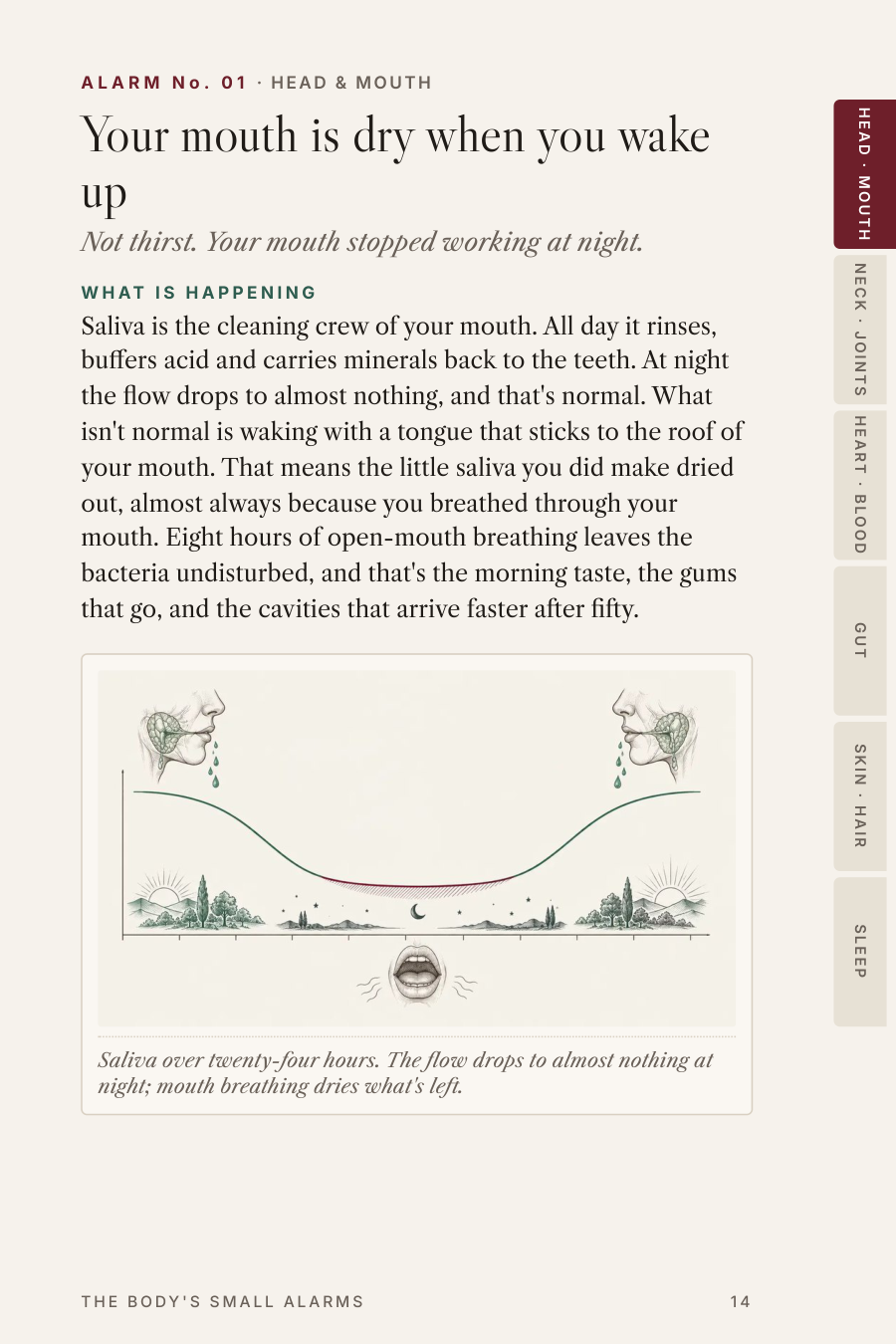
Fifty signals. For each: what is happening inside, what it is short of, what to change tonight, the test at home, and when it is no longer small.
50 alarms · 6 tabs · 171 pages
All six for $26.95 · see the prices ›
Book 02 · on its own $11.95
101 Forgotten Nature Remedies
"What do I make against it?"
Before the pharmacy there was the kitchen. The cabbage leaf, the onion, the salt gargle, the rice water: a hundred and one remedies with the amounts, the hour, and why they work.
101 remedies · 6 tabs · 124 pages
All six for $26.95 · see the prices ›
Book 03 · on its own $11.95
The Nature Health Bible
"What are the laws of nature for my body?"
Your body was built for a world that no longer exists. Forty-two laws in seven parts: light, water and salt, food, movement, rest, cold and heat, the mind. What to do, what to leave, the proof, the test.
42 laws · 7 parts · 105 pages
All six for $26.95 · see the prices ›
Book 04 · on its own $11.95
Back to Beautiful
"How do I look like myself again, without the salon?"
Face, skin, hair, bust and neck, thighs, posture, hands. Seventy-six secrets from the kitchen and the cutlery drawer, and honest words about what no jar can do.
76 secrets · 7 tabs · 101 pages
All six for $26.95 · see the prices ›
Book 05 · on its own $8.95
The 14-Day Reset
"Where do I start?"
Here. One thing a day for fourteen days, in an order that works. Three measurements on day one, seven and fourteen, so you see it move.
14 days · 3 measurements · 27 pages
All six for $26.95 · see the prices ›
Book 06 · on its own $11.95
The Mouth Reset
"What do I do about my breath, my gums, my throat?"
Where the smell actually lives, the four steps before bed, what to keep in the cupboard, and the part that comes from inside.
5 tabs · 37 pages
All six for $26.95 · see the prices ›